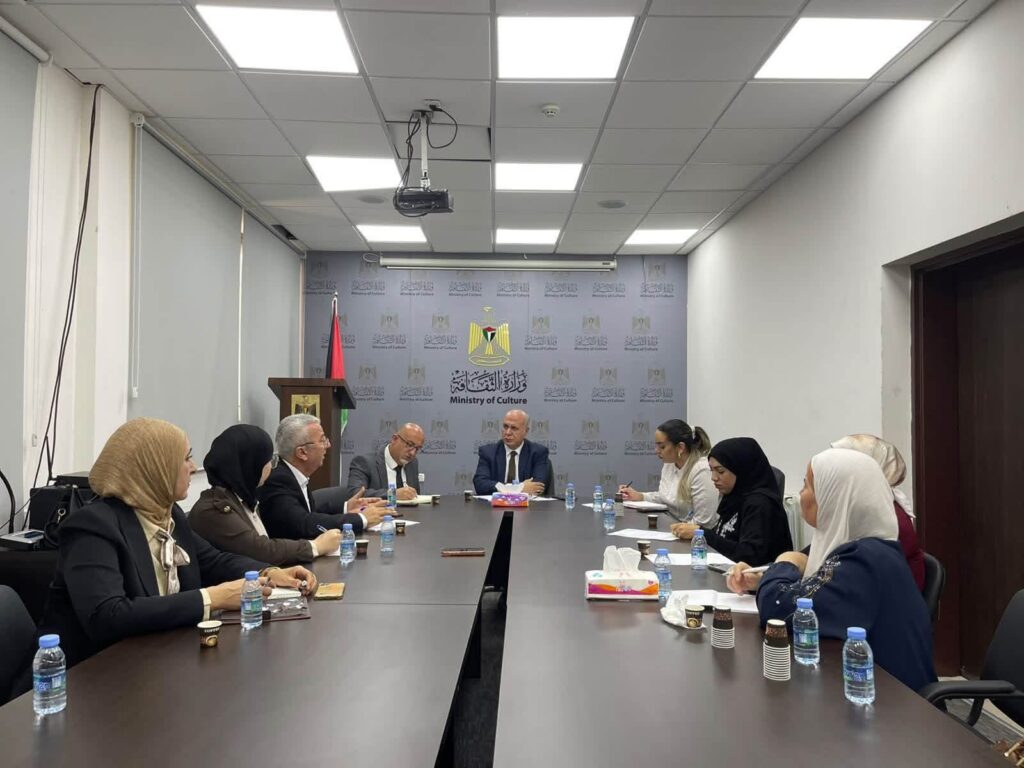
التقى وفد من شبكة نسيج للمؤسسات المجتمعية، التي تضم 20 مؤسسة وجمعية وهيئة محلية، بوزير الثقافة السيد عماد حمدان، وذلك لبحث آفاق التعاون المشترك بين الوزارة والشبكة، وتعزيز الشراكة في دعم المبادرات الثقافية والتنموية التي تخدم مدينة نابلس، والاتفاق على خطوات عملية لتنفيذ أنشطة وفعاليات ثقافية مشتركة خلال المرحلة المقبلة.
وأكد الوزير حمدان أهمية الدور الذي تلعبه المؤسسات المجتمعية في تفعيل الحراك الثقافي والمجتمعي في المدينة، مشدداً على حرص وزارة الثقافة على تقديم سبل الدعم الممكنة لهذه المؤسسات، لما تقوم به من دور فاعل في إثراء المشهد الثقافي الفلسطيني، وتعزيز المشاركة المجتمعية.
وأضاف أن شبكة نسيج تمثل نموذجاً للعمل التشاركي والتكامل بين المؤسسات، وتسهم في توحيد الجهود وتبادل الخبرات، مؤكداً سعي الوزارة إلى بناء شراكات فاعلة ومستدامة مع مختلف المؤسسات والفعاليات الثقافية في محافظة نابلس.
من جانبه، أكد رئيس جمعية عسكر للتنمية والتطوير المجتمعي السيد أمجد الرفاعي أهمية هذا اللقاء في تعزيز العلاقة بين المؤسسات المجتمعية ووزارة الثقافة، مشيراً إلى أن شبكة نسيج تمتلك إمكانات وخبرات متنوعة من خلال مؤسساتها الأعضاء، ما يتيح فرصاً واسعة لتنفيذ برامج ومبادرات ثقافية مشتركة تستجيب لاحتياجات المجتمع المحلي.
وشدد الرفاعي على أهمية الاستثمار في طاقات الأطفال والشباب والنساء، وتوفير مساحات ثقافية وإبداعية تتيح لهم التعبير عن مواهبهم والمشاركة الفاعلة في الحياة الثقافية والمجتمعية، مؤكداً استعداد مؤسسات الشبكة للتعاون والعمل المشترك مع الوزارة لتحقيق هذه الأهداف.
وخلال اللقاء، استعرض ممثلو الشبكة رؤيتها وأهدافها ودورها في تعزيز التعاون والتكامل بين المؤسسات المجتمعية، كما جرى نقاش عدد من الأنشطة والمشاريع الثقافية المشتركة التي تسعى الشبكة إلى تنفيذها خلال الفترة المقبلة، مع التأكيد على قدرتها على الوصول إلى مختلف فئات المجتمع، وخاصة الأطفال والشباب والنساء، من خلال المؤسسات الأعضاء.
وشارك في اللقاء ممثلو المؤسسات والجمعيات الأعضاء في شبكة نسيج، وهم:
- جمعية عسكر للتنمية والتطوير المجتمعي، ممثلة برئيسها السيد أمجد الرفاعي، ومسؤولة برامج التمكين الاقتصادي السيدة تغريد المدني.
- جمعية عيبال للتنمية الوطنية، ممثلة بالسيدة روزين أبو طيون.
- جمعية سواعد، ممثلة برئيستها السيدة نهاوند بيشاوي.
- مركز أجيال الغد للتطوير التربوي والتنمية المجتمعية، ممثلاً برئيسه السيد غسان الطيراوي.
- جمعية الحرية الخيرية، ممثلة بالسيدة مها صبرا.
- جمعية نساء دير الحطب الخيرية، ممثلة بالسيدة نادين عمران.
ويأتي هذا اللقاء في إطار رؤية شبكة نسيج لتعزيز التشبيك والتكامل بين المؤسسات المجتمعية، وتوسيع آفاق الشراكة مع المؤسسات الرسمية، بما يسهم في تطوير العمل الثقافي والتنموي، وإحداث أثر إيجابي ومستدام في المجتمع المحلي.
Naseej Network Meets with the Minister of Culture to Discuss Prospects for Cultural Cooperation and Strengthen Partnerships in Serving the Local Community in Nablus
A delegation from the Naseej Network of Community-Based Institutions, which brings together 20 local institutions, associations, and organizations, met with the Minister of Culture, Mr. Imad Hamdan, to discuss prospects for cooperation between the Ministry and the Network, strengthen partnerships in supporting cultural and developmental initiatives serving the city of Nablus, and agree on practical steps to implement joint cultural activities and events in the coming period.
Minister Hamdan emphasized the important role played by community-based institutions in activating cultural and community life in the city. He stressed the Ministry of Culture’s commitment to providing possible forms of support to these institutions, recognizing their active contribution to enriching the Palestinian cultural scene and strengthening community participation.
He added that the NISIJ Network represents a model of collaborative work and institutional integration, contributing to unifying efforts and exchanging expertise. He also affirmed the Ministry’s commitment to building effective and sustainable partnerships with various institutions and cultural stakeholders across Nablus Governorate.
For his part, Mr. Amjad Al-Rifai, President of Askar Association for Community Development, highlighted the importance of this meeting in strengthening relations between community-based institutions and the Ministry of Culture. He noted that the NISIJ Network possesses diverse capacities and expertise through its member institutions, creating broad opportunities to implement joint cultural programs and initiatives that respond to the needs of the local community.
Al-Rifai also stressed the importance of investing in the potential of children, youth, and women, and providing cultural and creative spaces that enable them to express their talents and actively participate in cultural and community life. He affirmed the readiness of the Network’s member institutions to cooperate and work jointly with the Ministry towards achieving these goals.
During the meeting, Network representatives presented its vision, objectives, and role in strengthening cooperation and integration among community-based institutions. Discussions also covered several joint cultural activities and projects that the Network aims to implement in the coming period, highlighting its capacity to reach different segments of society, particularly children, youth, and women, through its member institutions.
The meeting was attended by representatives of the NISIJ Network’s member institutions and associations, including:
- Askar Association for Community Development, represented by its President, Mr. Amjad Al-Rifai, and Economic Empowerment Programs Officer, Ms. Taghreed Al-Madani.
- Ibal Association for National Development, represented by Ms. Rosine Abu Tayon.
- Sawaed Association, represented by its President, Ms. Nahawand Bishawi.
- Ajyal Al-Ghad Center for Educational Development and Community Development, represented by its President, Mr. Ghassan Al-Tirawi.
- Al-Hurriya Charitable Association, represented by Ms. Maha Sabra.
- Deir Al-Hatab Women’s Charitable Association, represented by Ms. Nadine Imran.
This meeting comes within the framework of the NISIJ Network’s vision to strengthen networking and integration among community-based institutions and expand partnerships with official institutions, contributing to the development of cultural and community work and creating a positive and sustainable impact on the local community.
Le réseau NISIJ rencontre le ministre de la Culture pour discuter des perspectives de coopération culturelle et renforcer les partenariats au service de la communauté locale à Naplouse
Une délégation du réseau NISIJ des institutions communautaires, qui regroupe 20 institutions, associations et organisations locales, a rencontré le ministre de la Culture, M. Imad Hamdan, afin de discuter des perspectives de coopération entre le ministère et le réseau, de renforcer les partenariats en faveur des initiatives culturelles et de développement au service de la ville de Naplouse, et de convenir de mesures concrètes pour mettre en œuvre des activités et des événements culturels communs au cours de la prochaine période.
Le ministre Hamdan a souligné le rôle important joué par les institutions communautaires dans la dynamisation de la vie culturelle et sociale de la ville. Il a réaffirmé l’engagement du ministère de la Culture à apporter les formes de soutien possibles à ces institutions, compte tenu de leur contribution active à l’enrichissement du paysage culturel palestinien et au renforcement de la participation communautaire.
Il a ajouté que le réseau NISIJ représente un modèle de travail participatif et de complémentarité institutionnelle, contribuant à unir les efforts et à favoriser l’échange d’expertises. Il a également affirmé la volonté du ministère de construire des partenariats efficaces et durables avec les différentes institutions et les acteurs culturels du gouvernorat de Naplouse.
De son côté, M. Amjad Al-Rifai, président de l’Association Askar pour le développement communautaire, a souligné l’importance de cette rencontre pour renforcer les relations entre les institutions communautaires et le ministère de la Culture. Il a indiqué que le réseau NISIJ dispose de capacités et d’expertises diversifiées grâce à ses institutions membres, offrant ainsi de nombreuses possibilités de mettre en œuvre des programmes et des initiatives culturels communs répondant aux besoins de la communauté locale.
M. Al-Rifai a également insisté sur l’importance d’investir dans le potentiel des enfants, des jeunes et des femmes, et de mettre à leur disposition des espaces culturels et créatifs leur permettant d’exprimer leurs talents et de participer activement à la vie culturelle et communautaire. Il a confirmé la disponibilité des institutions membres du réseau à coopérer et à travailler conjointement avec le ministère pour atteindre ces objectifs.
Au cours de la rencontre, les représentants du réseau ont présenté sa vision, ses objectifs et son rôle dans le renforcement de la coopération et de la complémentarité entre les institutions communautaires. Les discussions ont également porté sur plusieurs activités et projets culturels communs que le réseau souhaite mettre en œuvre au cours de la prochaine période, tout en soulignant sa capacité à atteindre différentes catégories de la société, notamment les enfants, les jeunes et les femmes, grâce à ses institutions membres.
La rencontre s’est déroulée en présence des représentants des institutions et associations membres du réseau NISIJ, notamment :
- L’Association Askar pour le développement communautaire, représentée par son président, M. Amjad Al-Rifai, et par la responsable des programmes d’autonomisation économique, Mme Taghreed Al-Madani.
- L’Association Ibal pour le développement national, représentée par Mme Rosine Abu Tayon.
- L’Association Sawaed, représentée par sa présidente, Mme Nahawand Bishawi.
- Le Centre Ajyal Al-Ghad pour le développement éducatif et communautaire, représenté par son président, M. Ghassan Al-Tirawi.
- L’Association caritative Al-Hurriya, représentée par Mme Maha Sabra.
- L’Association caritative des femmes de Deir Al-Hatab, représentée par Mme Nadine Imran.
Cette rencontre s’inscrit dans le cadre de la vision du réseau NISIJ visant à renforcer la mise en réseau et la complémentarité entre les institutions communautaires, ainsi qu’à élargir les perspectives de partenariat avec les institutions officielles, contribuant ainsi au développement du travail culturel et communautaire et à la création d’un impact positif et durable au sein de la communauté locale.